

Key takeaways
- Podcasters and YouTubers sit on hours of proven content and publish almost none of it as Shorts. You sell the bridge.
- AI clipping tools meter on source minutes (entry tiers $0–$29/month as of Oct 2026), so one podcast client's monthly footage costs you under $30 to process.
- Sell monthly packages per show, not per clip — recurring beats gigs, and the workflow is identical every episode.
- The AI picks candidate clips; your taste picks the winners. That judgment is the part clients can't replace with the same tool.
Every podcaster has heard "you should be posting clips." Almost none of them do it, because after recording, editing, and publishing an episode, nobody has four more hours for vertical cutdowns.
That unglamorous gap is model #3 in our AI video income rankings — and it's the one with the most natural recurring revenue: shows publish weekly, forever.
Here's the service end to end: tools and costs, the package structure, a delivery workflow that survives scale, and how to win clients in a market where everyone owns the same software.
What is an AI video repurposing service?
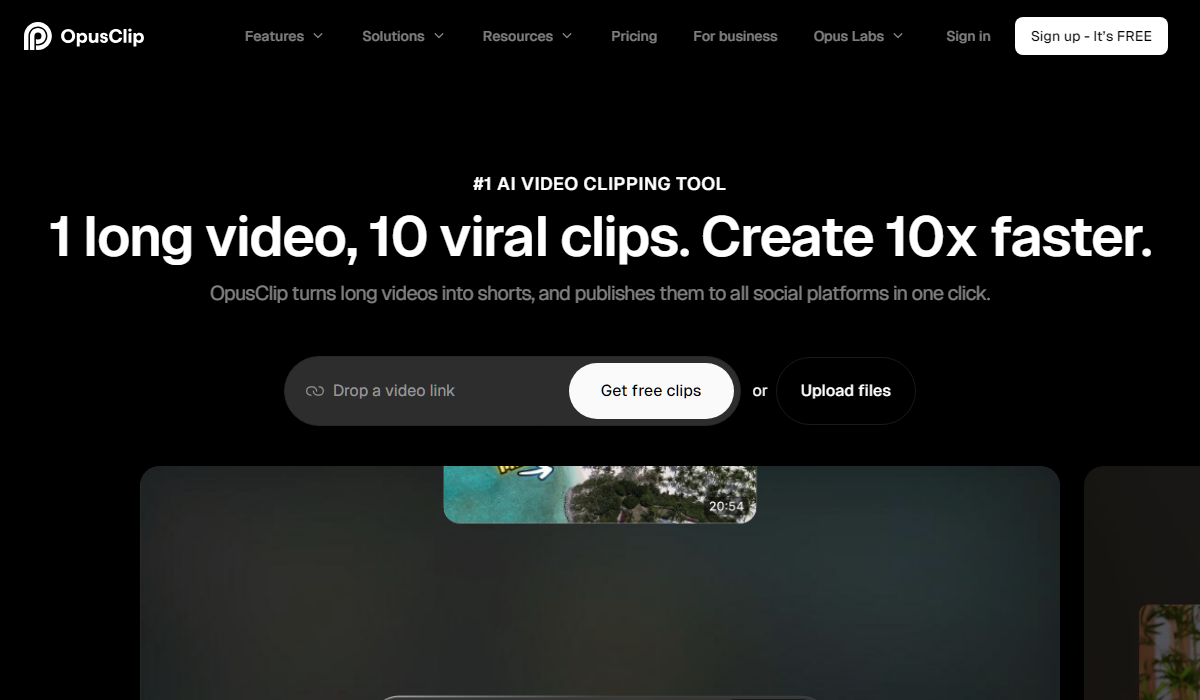
An AI video repurposing service takes a client's existing long-form content — podcasts, webinars, YouTube videos — and turns each episode into a batch of short vertical clips with captions, hooks, and platform-ready formatting. AI clipping tools find candidate moments and auto-caption them; the service layer is selecting winners, sharpening hooks, and delivering a publish-ready package every week.
What you need before you start
- An AI clipping tool. Entry pricing runs $0–$29/month: one major tool lists free (60 source-minutes), $15 (150 minutes) and $29 (300 minutes) tiers, metered on the length of the source video, not the number of clips (as of Oct 2026 — tiers shift often and third-party pages disagree on rivals' prices, so verify on vendor sites). See our AI video editors comparison for current picks.
- A captioning pass that matches each client's brand — fonts, colors, positioning. Our auto-captioning tools roundup covers the ones worth using.
- One sample show. Any public podcast works for your portfolio batch — clip it, watermark it "spec work," and you have a sales asset.
Startup cost: under $30/month covers your first two clients' footage. Margin problem: none.
Step-by-step: the weekly repurposing workflow
Step 1: Ingest and let the AI shortlist
Feed the episode link to the clipping tool and let it propose 15–25 candidate moments. Don't trust its ranking — the tools overvalue loud moments and undervalue complete thoughts.
Step 2: Pick 8–10 winners like an editor, not a tool
Selection criteria that actually predict performance: a self-contained idea (no missing context), a strong first 2 seconds, and one emotion per clip. This is the judgment layer clients pay for — our hooks guide is the playbook.
Step 3: Caption, brand, and version
Burned-in branded captions, a hook line as on-screen text for the first seconds, 9:16 master plus 1:1 where the client posts to feeds. Keep per-platform tweaks light — cross-posting done right is mostly about native captions and titles, not re-edits.
Step 4: Deliver as a calendar, not a folder
Ship clips named by suggested post date (ep142_clip1_mon.mp4) with a one-line caption suggestion per clip. A client who can schedule your delivery in ten minutes renews; a client who receives ten anonymous files churns.
Pro tip: include one "experiment" clip per batch — an unusual format or hook style — and tell the client it's the experiment. When one pops, you become the strategist, not the vendor.
What to charge
Listed per-clip rates in freelancer marketplaces run roughly $35–$200 depending on polish. But per-clip pricing undersells the real product — consistency. Package it monthly per show (our positioning guidance, anchored to those listed rates):
| Package | Deliverable | Positioning |
|---|---|---|
| Starter | 1 episode/month → 8 clips | $250–$400/month |
| Weekly show | 4 episodes/month → 30+ clips | $600–$1,000/month |
| Multi-show / agency | 2+ shows, calendar + captions | $1,200+/month |
Three weekly-show clients ≈ a reliable four-figure month from one repeatable workflow.
Heads up: never price per source-hour — clients with 3-hour episodes will bankrupt your calendar. Price per episode with a stated max length.
How to get clients when everyone owns the same tools
The tool isn't the moat; the niche and the spec work are.
- Pick one vertical. "Clips for B2B SaaS podcasts" beats "clips for anyone" — you learn one audience's hooks, and referrals stay in-network.
- Spec batch outreach. Clip a prospect's latest episode — three finished clips, their branding — and send them over. It's the same spec-demo play as UGC ads: proof beats pitch.
- Mine the "clips graveyard." Shows that posted clips for three weeks and stopped already believe in the idea; they just couldn't sustain the labor. They're your warmest list.
The monthly report that renews clients
Repurposing clients churn when the clips feel like a cost, and renew when they feel like growth. One page per month closes that gap. Send, for each client:
- Output line: episodes processed, clips delivered, on-time rate. (Proof the machine runs.)
- Performance line: top 3 clips by views/saves with one sentence each on why — the hook style, the topic, the format. (Proof there's judgment.)
- Transfer line: one measurable the client cares about — podcast follows, profile taps, link clicks — moving month over month. (Proof it feeds the show, not just the clip account.)
- Next-month bet: the one experiment you'll run and what would make it a win. (The reason to stay for next month, in writing.)
Ten minutes per client once templated — and it quietly converts you from "the clips vendor" into the retained strategist whose rate survives every cheaper competitor.
Heads up: never report vanity totals alone ("2M clip views!") to a client whose show didn't grow — they eventually notice, and the trust spent there doesn't come back.
Common mistakes to avoid
- Shipping the AI's picks unedited. The client ran the same tool trial; if your output matches it, so does your value.
- Unlimited revisions. Two rounds, stated in the package. Clip work invites infinite fiddling.
- Ignoring the client's analytics. Monthly, ask which clips drove listens. Tying your batch to their growth is the renewal conversation doing itself.
- Competing on price. Someone will always clip for $5. Compete on calendar-ready delivery and hook judgment.
FAQ
Is AI video repurposing still a sellable service if clients can use the tools themselves? Yes — the constraint was never software access. Clients lack time, caption branding, hook judgment, and above all consistency across fifty straight episodes. The same logic applies to accounting software and accountants. Sell the done-for-you consistency, not tool access.
What is the best AI clipping tool to start with? Start on a free tier (60 source-minutes covers a spec batch) and upgrade when a paying client's footage exceeds it. Which tool depends on caption quality and per-source-minute cost for your clients' episode lengths — our editors comparison stays current on the trade-offs.
How many clips should one podcast episode produce? Eight to ten publishable clips per hour-long episode is a sustainable quality bar. The AI will happily propose twenty-five; shipping them all trains the client's audience to skip the account. Fewer, stronger clips grow accounts and renew contracts.
How much can a solo repurposing service earn per month? At the package structure above, four weekly-show clients is roughly $2,400–$4,000/month in listed-rate terms, against under $100 in tooling — but each weekly show is 6–10 hours of monthly work once templated, so the solo ceiling is the calendar, not the margin.
Your next step
Pick one show in a niche you understand, clip three spec shorts from their latest episode tonight, and send them with one line: "Your Tuesday episode had three clips in it. Here they are. I can do this every week." The free AI Income Ideas course has the outreach scripts for this exact play.
Next in the series: the honest verdict on the model everyone YouTube-searches first — Is YouTube Automation with AI Worth It in 2026?.